
The Homegrown Peptides Research Blog
Peptide science, delivery formats, third-party testing and Certificate-of-Analysis guidance — written for researchers who care about analytical rigor.
Calculating Concentrations for Two-Peptide Blend Vials
How to calculate each peptide's own mg/mL and molarity from a two-component blend vial, worked through with a real reconstitution table.…
Read article →
CJC-1295 With DAC vs Without DAC: What the Drug Affinity Complex Changes
CJC-1295 with DAC and without DAC share a GHRH(1-29) backbone; the Drug Affinity Complex is what separates their reported plasma persistence.…

What FDA's 503A Bulk Drug Substances Lists Mean for Research Peptides
A plain-language look at FDA's 503A bulk drug substance categories, which peptides sit in Category 2, and what that classification does and does not regulate.…
How to Get a Research Peptide Independently Tested: Methods, Labs and What to Ask For
A guide to the tests, lab credentials and sample handling used to independently verify a peptide lot beyond the vendor's own certificate of analysis.…
mg, mcg, IU and Insulin-Syringe Units: Reading Peptide Quantities Without Mixing Them Up
A plain-language guide to mass units, syringe-unit markings and IU so lab notebooks stay unambiguous.…
Peptide Bioavailability by Route: What the Research Literature Says About Subcutaneous, Intranasal, Oral and Topical Delivery
A literature review of how route of administration affects peptide bioavailability in published pharmacokinetic and preclinical studies.…
Peptide Half-Life Explained: Why It Ranges From Minutes to a Week
Peptide half-life spans minutes to about a week, set by proteolysis, renal clearance and chemical modifications like lipidation and PEGylation.…
How to Calculate a Peptide's Molecular Weight and Formula From Its Sequence
A bench walkthrough of how residue masses, terminal modifications and water loss combine to give a peptide's formula and molecular weight.…
Setting Up a Small-Lab Peptide Storage Station: Freezer, Fridge, Desiccant and Labeling
A lab-operations guide to freezer and fridge zones, desiccant, light control, labeling and temperature logs for a peptide storage station.…
What Is AOD-9604? The Modified hGH Fragment 176-191 Explained
AOD-9604 is a synthetic hGH fragment (residues 176-191 with an added tyrosine) studied in rodent and clinical research since the 1990s.…
What Is Dihexa? An Angiotensin IV Derived Peptide in Cognitive Research
Dihexa is an angiotensin IV derived research compound developed at Washington State University and studied for its proposed HGF/c-Met signaling activity.…
What Is DSIP? Delta Sleep-Inducing Peptide and Its Research History
DSIP is a nonapeptide first isolated from rabbit cerebral venous blood in 1977, named for an EEG effect and still studied without a confirmed receptor.…
What Is Kisspeptin-10? The Decapeptide Upstream of GnRH in Reproductive Research
Kisspeptin-10 is the ten-amino-acid core of the KISS1 gene product, studied for its role upstream of the GnRH pulse generator in reproductive research.…
What Is KPV? The Alpha-MSH C-Terminal Tripeptide in Inflammation Research
KPV (Lys-Pro-Val) is the C-terminal tripeptide of alpha-MSH, studied in vitro and in rodent models for its effects on NF-kB and cytokine signaling.…
What Is PT-141 (Bremelanotide)? A Melanocortin Receptor Agonist in Research
PT-141 (bremelanotide) is a cyclic heptapeptide melanocortin agonist derived from melanotan-2 and studied at MC1R, MC3R, MC4R.…
What Is Semaglutide? The GLP-1 Receptor Agonist Explained for Research
A structural and mechanistic explainer on semaglutide, the acylated GLP-1 analog behind Ozempic, Wegovy, and Rybelsus, for research reference.…
What Is Thymosin Alpha-1? The 28-Amino-Acid Thymic Peptide in Immune Research
What thymosin alpha-1 is, where the 28-amino-acid sequence comes from, and what the published literature reports about its immune signaling.…
What Is Tirzepatide? The Dual GIP and GLP-1 Receptor Agonist for the Research Bench
Tirzepatide is a 39-amino-acid peptide engineered to activate both the GIP and GLP-1 receptors, studied in metabolic research literature.…
Retatrutide vs Tirzepatide vs Semaglutide: How the Three Incretin Peptides Differ in the Lab
One receptor, two receptors, three receptors. How the structure of each incretin peptide shapes what it can model in a research setting.…
How to Read a Peptide Certificate of Analysis
A COA is only useful if you know what each line proves and what it leaves out. Here is how to read one, section by section.…
HPLC Purity Explained: What 99% Actually Measures, and What It Doesn't
The purity number on every vendor's page comes from one instrument and one calculation. Here is what it is really telling you.…
Reconstituting Lyophilized Peptides: The Math, Step by Step
Vial mass, diluent volume, final concentration. The arithmetic every lab does before the first sample, worked through with examples.…
Bacteriostatic Water vs Sterile Water for Peptide Research
Both are water. One has 0.9% benzyl alcohol. That small difference decides how long a reconstituted vial stays usable.…
Peptide Storage and Stability: Lyophilized vs Reconstituted, Temperature, Light and Freeze-Thaw
A sealed vial of powder and an opened vial of solution are two different materials with two different shelf lives. Here is what governs each.…
Beyond Purity: Endotoxin, Sterility and Heavy-Metal Testing for Research Peptides
A 99% purity figure is blind to bacteria, endotoxin, metals and residual solvent. These are the four tests that cover what HPLC cannot.…
How to Spot a Bad Peptide Vendor: 10 Red Flags Researchers Should Check
Ten things you can check before spending anything, and what a credible supplier says in response to each.…
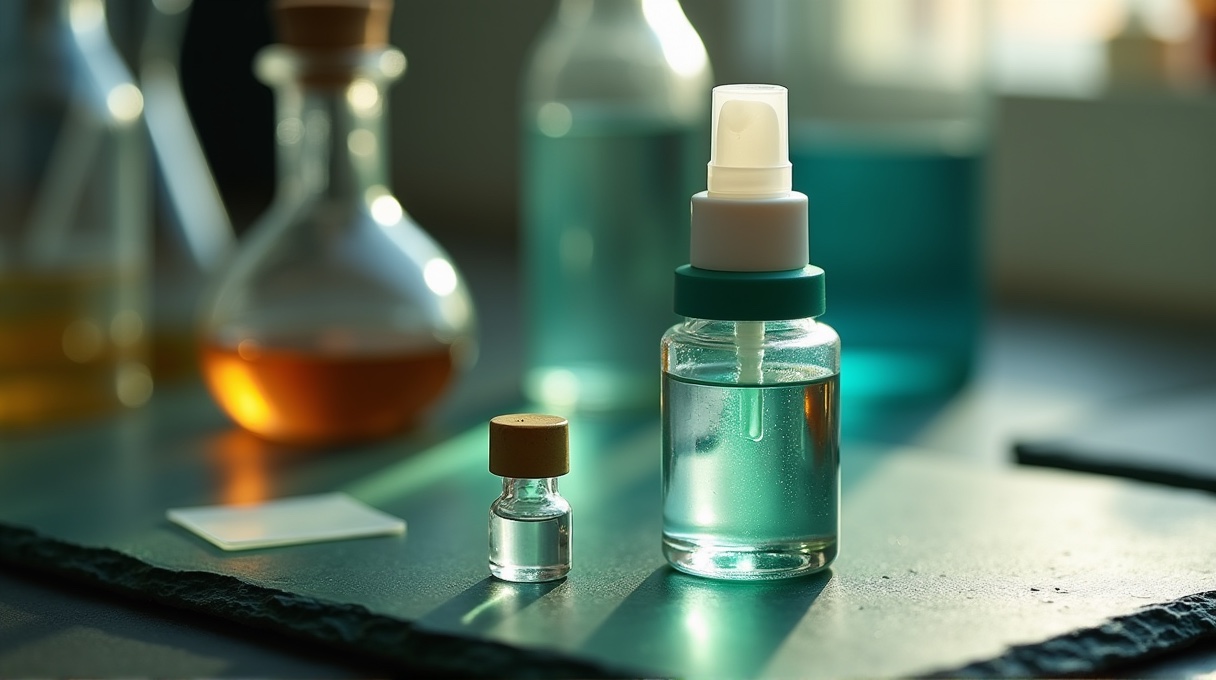
Peptide Delivery Formats in Research: Lyophilized Vials, Nasal Sprays and Dissolving Strips
Three ways the same peptide can be prepared for study, and what each format changes about formulation, stability and the questions it can answer.…
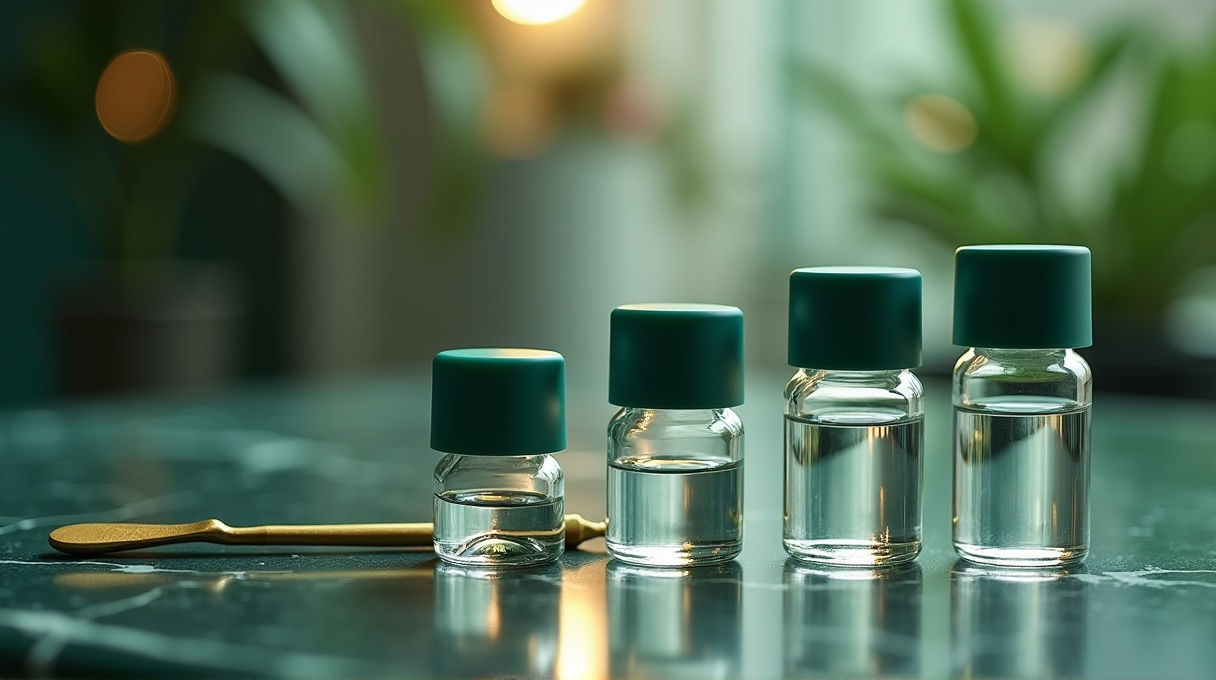
Choosing the Right Peptide Vial Size for a Study
Vial size is a planning decision, not a shopping one. Work backward from the experiment count and the shelf life of the solution.…
What Is BPC-157? Structure, Origin and the Pathways Studied in Research
Fifteen amino acids, no disulfide bridges, and a very large preclinical literature. Here is what BPC-157 actually is and which pathways the published work points at.…
What Is TB-500? The Acetylated Heptapeptide From Thymosin Beta-4
TB-500 is a seven-residue synthetic peptide. Most of the biology cited next to it belongs to a 43-residue protein. Here is how the two relate and what the vial actually contains.…
Why Labs Pair BPC-157 and TB-500: The Wolverine Blend Explained
Two peptides, two different mechanisms, one vial. What a co-lyophilized blend is, how the concentration math works, and when a lab should keep them apart.…
What Is GHK-Cu? The Copper Tripeptide in Skin, Collagen and Gene-Expression Research
Three amino acids and one copper ion. GHK-Cu is the smallest peptide in the catalogue and has one of the longest research histories.…
GLOW vs KLOW: What Is in Each Blend and Why the KPV Matters
GLOW is three peptides in one vial. KLOW is the same three plus KPV. Here is what each component brings and how the labels are read.…
What 'Research Use Only' Means, and Why It Is on Every Vial
RUO is a category with real boundaries. Here is what the label allows a vendor to say, what it obliges a laboratory to do, and why it is not a formality.…
Selank vs Semax: Two Heptapeptides and the Research Behind Each
Both are seven residues long and both end in Pro-Gly-Pro. Everything else about their origin and their studied pathways is different.…
Mitochondrial Research Compounds: NAD+, MOTS-c and SS-31 Compared
Three compounds grouped under one heading because of where they act, not because of what they are. One is not even a peptide.…
Growth Hormone Secretagogues in Research: Ipamorelin, CJC-1295, Sermorelin and Tesamorelin
Two receptors, two families, one pituitary. Why a GHRH analog and a ghrelin receptor agonist are studied as a pair rather than as substitutes.…
Bioregulator Peptides Explained: Epithalon, Thymalin, Pinealon and the Khavinson Short-Peptide Family
Two to four residues each, a single research institute, and a hypothesis about peptides binding DNA directly. What is established and what is not.…
What Is Lyophilization? Why Research Peptides Ship as Freeze-Dried Powder
Freezing, sublimation, then desorption. How a peptide solution becomes a dry cake that holds up on a shelf, and what that cake tells you before the vial is opened.…
Mass Spectrometry for Peptide Identity: How LC-MS Proves What Is in the Vial
HPLC tells you a sample is clean. Mass spectrometry tells you what it is. Here is how the measurement works and how to read the number it produces.…
Net Peptide Content vs Purity: Why a 99% Pure Vial Is Not 99% Peptide by Weight
Purity asks what kind of peptide. Net content asks how much of the powder is peptide at all. Two numbers, two questions, and only one of them is usually advertised.…
Solid-Phase Peptide Synthesis Explained: How Research Peptides Are Made
One residue at a time, anchored to a bead. The chemistry behind every vial, and why the impurity profile on a certificate is a direct readout of how the peptide was built.…
Peptide Research Glossary: 50 Terms Every Lab Should Know
Fifty terms that turn up on certificates, product pages and method sections, each defined in a sentence or two and grouped by where you meet them.…
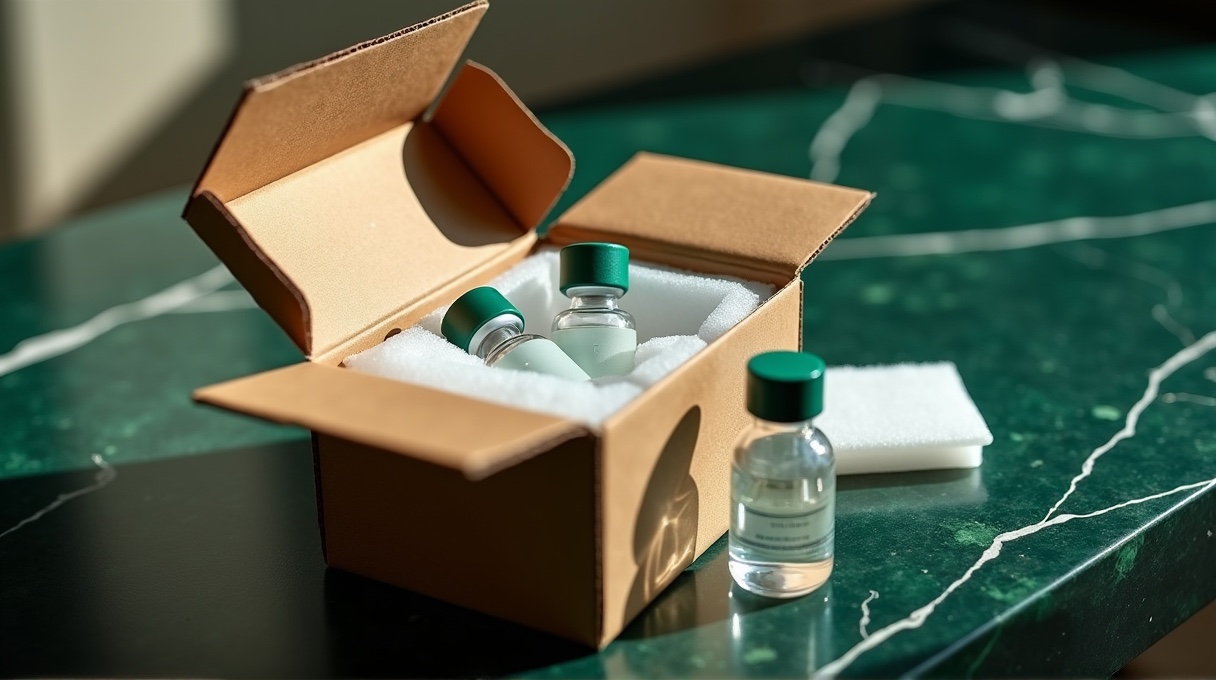
Cold Chain and Transit: Keeping Lyophilized Peptides Intact in Shipping
A vial spends days in conditions no lab controls. Here is why the freeze-dried form tolerates that, and what to check the moment the box opens.…

What Is a Peptide? Structure, Size and Signaling for the Research Bench
Amino acids joined by one kind of bond, ordered in one direction. Everything a peptide does in a model follows from that sequence.…
Melanotan-1 vs Melanotan-2: Two Alpha-MSH Analogs Compared for Research
One is linear and thirteen residues long. The other is a cyclic heptapeptide. The difference in receptor selectivity follows directly from that.…
Retatrutide and Cagrilintide: What an Amylin Analog Adds to a Triple Agonist in Research
Three incretin receptors plus a separate amylin signal. Why labs pair the two, and how to handle a two-component kit without mixing up the numbers.…
Why USA-Made Matters for Research Peptides: Traceability, Testing and Transit
Three concrete reasons a domestic supply chain shows up in the data: a shorter chain of custody, fewer temperature excursions, and a lab you can actually call.…
What Is Retatrutide? The Triple Agonist Explained for Research
One peptide, three receptors, one engineered ratio between them. What retatrutide is, where it came from, and what it is used to model in the lab.…
What Is Ipamorelin? A Selective Ghrelin-Receptor Agonist in Research
Five residues, one receptor, and a selectivity result from 1998 that still explains why labs reach for it. A working introduction to ipamorelin.…
What Is NAD+? The Coenzyme Behind Redox and Sirtuin Research
NAD+ is the one compound on our shelf that is not a peptide at all. What it does chemically, why it is consumed rather than recycled, and how to handle it.…
Why Research Peptide Prices Vary So Much Per Milligram
Two vials of the same nominal mass can differ several-fold in price. Here is what actually sits behind the number, and what a very low price usually signals.…
How to Use a Peptide Reconstitution Calculator Without Making the Classic Mistakes
A reconstitution calculator does one division. Almost every error comes from the units you feed it, not the arithmetic it performs.…