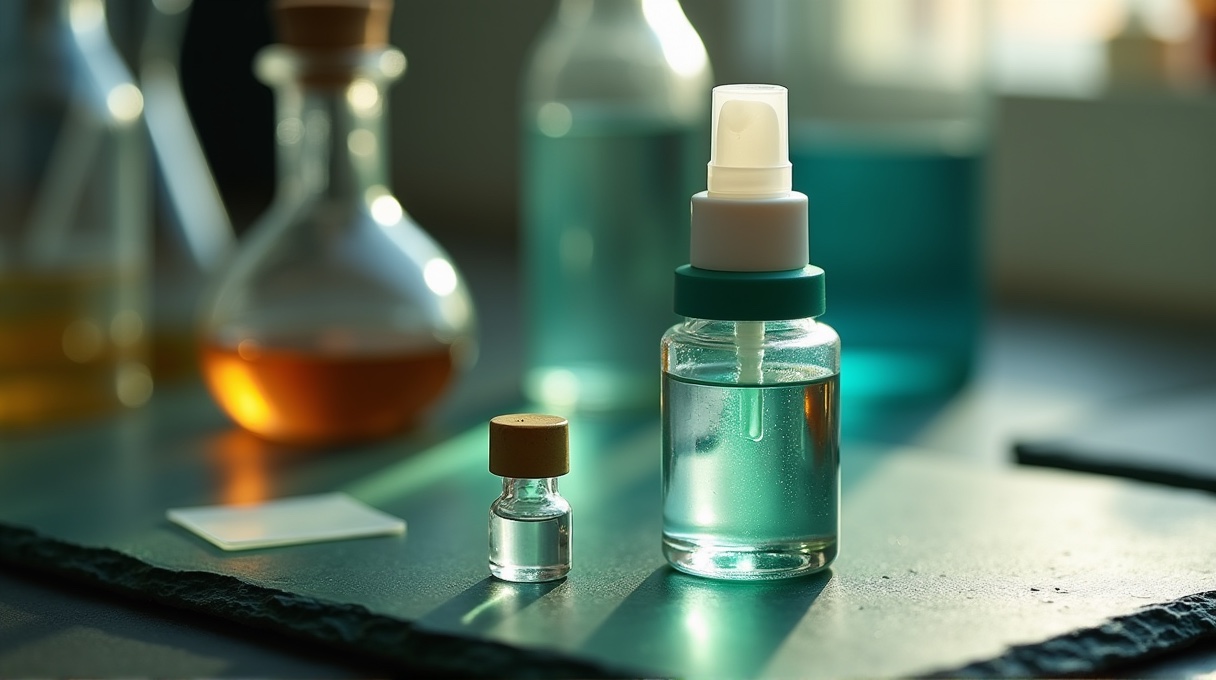
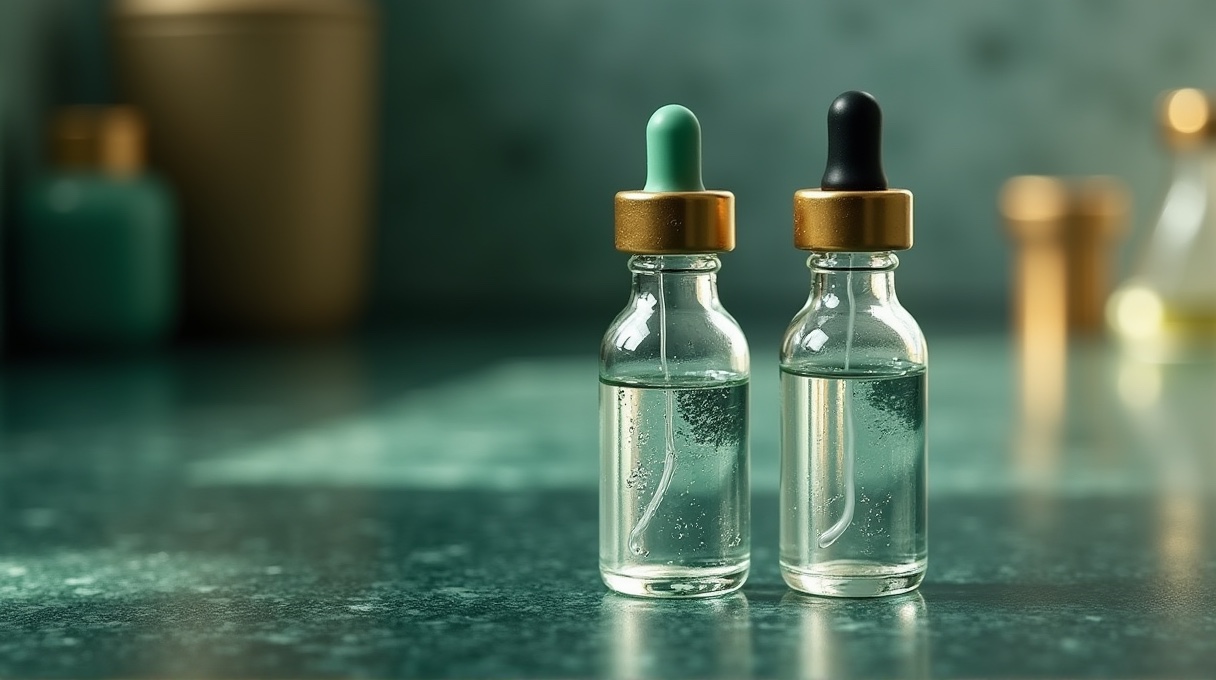
Every lyophilized peptide needs a diluent, and the two you will see most are bacteriostatic water and sterile water. They look identical. The difference is a single additive, and it changes how you can use the vial after opening.
What each one is
Sterile water for injection is purified water, sterilized, and packaged with no preservative. It is intended for single use. Once the container is opened, it is no longer considered sterile.
Bacteriostatic water is the same sterile water with 0.9% benzyl alcohol added. Benzyl alcohol inhibits the growth of bacteria. It does not sterilize contaminated water, and it does not kill established colonies. It slows growth enough that a multi-dose vial can be punctured repeatedly over a period of weeks without becoming a culture.
Why the distinction matters for peptides
A reconstituted peptide vial is usually drawn from many times. Every puncture of the stopper is a chance to introduce organisms. Without a bacteriostatic agent, the solution should be treated as single-use. With it, the standard practice in research labs is to keep the reconstituted vial refrigerated and to discard it within about four weeks, or sooner if the compound itself degrades faster.
Does benzyl alcohol affect the peptide?
At 0.9% it is generally compatible with peptides and is the diluent of choice in most published reconstitution methods. Two caveats. Some cell-culture assays are sensitive to benzyl alcohol, so for direct addition to cultures many labs reconstitute in sterile water or buffer and use the solution promptly. And a small number of compounds have specific solvent recommendations on their certificate; follow those when present.
Which to use
| Situation | Diluent |
|---|---|
| Multi-draw stock kept in the refrigerator over days or weeks | Bacteriostatic water |
| Single-use preparation, made and consumed the same day | Sterile water |
| Direct addition to sensitive cell cultures | Sterile water or assay buffer, used promptly |
| Nasal spray preparations | A diluent formulated for nasal delivery |
Our 30 mL reconstitution solution is bacteriostatic. The nasal reconstitution solution is formulated for spray preparations and is covered in our guide to delivery formats in research.
Handling either one correctly
- Wipe the stopper before every draw. Sterile 70% alcohol pads are the standard tool.
- Use a fresh sterile syringe for each draw. Our 31G 1 mL syringes are graduated in fine units for small volumes.
- Never return solution to the vial.
- Date the vial at first puncture.
- Store both diluents at room temperature before use, and refrigerate reconstituted peptide after.
Reading the label
Both products look the same on a shelf, so read the label rather than the shape of the bottle. Sterile water for injection is labeled exactly that, usually with the words "single-dose" and "contains no preservative". Bacteriostatic water carries "0.9% benzyl alcohol" and "multiple-dose" on the label. If the vial is unlabeled or the label is worn, treat the contents as unknown and do not use it for a reagent you care about. Our bottles are labeled on the front with the preservative content so the check takes a second.
Volume and vial size
A 30 mL bottle of bacteriostatic water reconstitutes a lot of peptide. At 2 mL per vial that is fifteen vials from one bottle, which is why most labs keep one bottle of diluent per bench rather than one per compound. The trade-off is that a single shared bottle is punctured often, so the 28-day discard rule matters more, not less. Some labs date the bottle at opening and buy smaller quantities more often rather than stretch one bottle across a quarter.
How benzyl alcohol works, briefly
Benzyl alcohol is a small aromatic alcohol that disrupts bacterial membranes and interferes with membrane-bound enzymes. At 0.9% it is bacteriostatic rather than bactericidal: it holds a small inoculum in check rather than sterilizing a heavily contaminated solution. That is why aseptic technique still matters with bacteriostatic water. The preservative buys margin, not immunity.
Compatibility notes by compound class
| Compound type | Bacteriostatic water | Note |
|---|---|---|
| Short linear peptides such as BPC-157 | Standard choice | Dissolve readily, stable for weeks refrigerated |
| Lipidated peptides such as semaglutide | Standard choice | Swirl longer; avoid foaming |
| Copper complexes such as GHK-Cu | Standard choice | Solution is faintly blue; that is the copper, not contamination |
| Coenzymes such as NAD+ | Acceptable | Light-sensitive in solution; protect from light |
| Cell-culture additions | Use with care | Some lines are sensitive to benzyl alcohol; consider sterile water or buffer |
Signs a diluent should be discarded
Any visible particles, cloudiness, discoloration, or a stopper that has been punctured more than the vial is designed for. Also discard a diluent that has been left at room temperature for extended periods after opening, or that has passed the 28-day window from first puncture that most labs adopt.
Not everything reconstituted at a peptide bench is a peptide. NAD+ is a coenzyme with its own light sensitivity in solution, and MOTS-c and SS-31 have handling notes of their own. We compare all three in our mitochondrial research compounds guide.
Frequently asked questions
Can I use tap or distilled water?
No. Neither is sterile, and distilled water can be hypotonic in ways that matter for some assays. Use a sterile diluent.
How long does bacteriostatic water last once opened?
The diluent itself is generally used within 28 days of first puncture. The reconstituted peptide may have a shorter usable window depending on the compound.
Is bacteriostatic water the same as saline?
No. Bacteriostatic saline exists and contains sodium chloride as well as benzyl alcohol. Bacteriostatic water contains no salt. Follow the certificate's solvent note if one is given.
Next: the arithmetic of volumes and concentrations in reconstitution, step by step.
References
- United States Pharmacopeia. Bacteriostatic Water for Injection monograph.
- Meyer BK, et al. 2007. Antimicrobial preservative use in parenteral products: past and present. Journal of Pharmaceutical Sciences.
- Wang W. 1999. Instability, stabilization, and formulation of liquid protein pharmaceuticals. International Journal of Pharmaceutics.
Research use only. Homegrown Peptides products, including diluents and consumables, are supplied for laboratory research and are not for human or animal use.