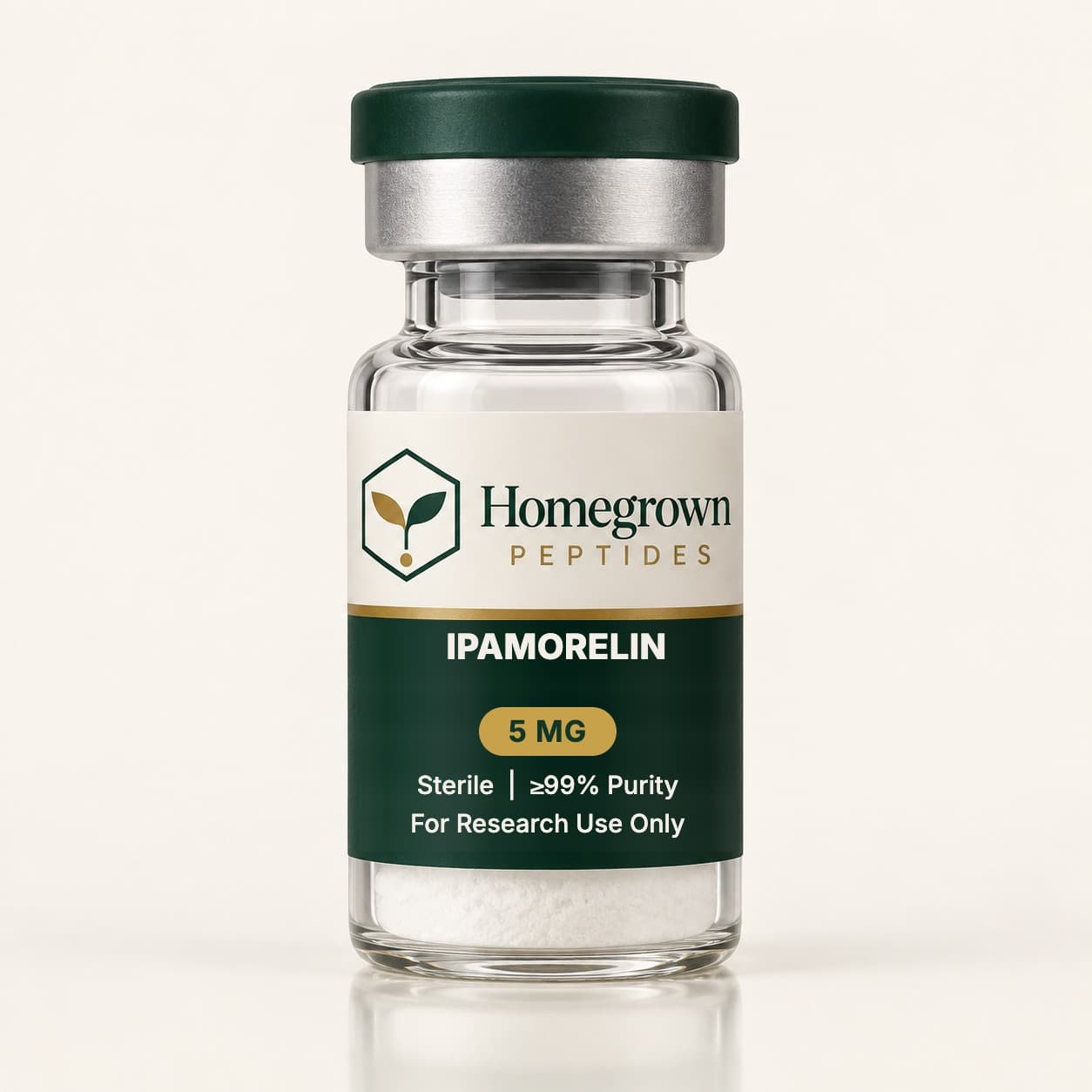
IPAMORELIN
Lot IPA5-0803 · 99.78 %- Lot-matched certificate of analysis, identity and purity by HPLC and mass spec
- Ships within 1 business day from the U.S., tracked, in protective packaging
- Research use only. Not for human or animal use
- Ships within 1 business day, tracked, protective packaging
- 2-Day $12.99, free at $1,000 and over
- Overnight $250
- Certificate of analysis available on request
- ≥99% purity specification, HPLC & mass-spec verified at source
- Ships from a U.S. facility within 1 business day
- Secure card checkout on our payment partner's page, 20% already in the total
Complete your setup
Lyophilized peptides need bacteriostatic water and sterile lab supplies to reconstitute. Add the essentials in one click.
 IPAMORELINIn your order
Ipamorelin is a synthetic pentapeptide (Aib-His-D-2-Nal-D-Phe-Lys-NH2) developed as a selective growth hormone secretagogue. Published pharmacology research in rat and swine models examines how it releases growth hormone through a ghrelin-receptor-like pathway while leaving cortisol, ACTH, and other pituitary hormones largely unaffected, distinguishing it from older secretagogues studied in the same GHRP receptor class.
Ipamorelin is a pentapeptide ghrelin-receptor agonist. It is valued in research for a selective growth hormone release profile with minimal effect on cortisol or prolactin in reported models.
Common research applications include:
- Growth hormone secretagogue research
- Ghrelin receptor pharmacology
- Pulsatile secretion models
Specifications
- Class: Selective growth hormone secretagogue
- Form: lyophilized powder in a sealed glass vial
- Available sizes: 5 mg, 10 mg
- Purity: verified at 99% or higher by HPLC, identity confirmed by mass spectrometry
- Testing: every lot is third-party tested, with a lot-matched Certificate of Analysis available on request
- supplied by a U.S. lab
- Storage: keep sealed, cool, dry and away from light; refrigerate after reconstitution
For laboratory research use only. This product is not for human or veterinary use, is not a drug, food or cosmetic, and is not intended to diagnose, treat, cure or prevent any disease.
What the Literature Studies
Raun and colleagues described ipamorelin's pharmacology in a 1998 paper in the European Journal of Endocrinology. In vitro, the peptide released growth hormone from primary rat pituitary cells with potency and efficacy similar to GHRP-6. In pentobarbital-anesthetized rats and in conscious swine, ipamorelin released growth hormone with a potency profile comparable to GHRP-6, acting through a GHRP-like receptor rather than the GHRH receptor pathway, confirmed using GHRP and GHRH receptor antagonists. Critically, the paper reports that ipamorelin, unlike GHRP-6 and GHRP-2, did not raise ACTH or cortisol in swine, and had no measurable effect on FSH, LH, prolactin, or TSH, a selectivity profile the authors describe as similar to GHRH itself despite acting through a different receptor.
Specification and Handling
This lot is a lyophilized powder with the sequence Aib-His-D-2-Nal-D-Phe-Lys-NH2, molecular formula C38H49N9O5, and molecular weight 711.85. CAS number is 170851-70-4. Purity is verified at 99% or greater by HPLC, identity confirmed by mass spectrometry, with the certificate of analysis for the lot available on request. The powder is soluble in bacteriostatic water; consult the COA for solvent specifics. Sealed vials are stored at -20°C protected from light and moisture, and reconstituted solution is refrigerated at 2-8°C. These figures describe the physical and chemical properties of the material as supplied, drawn directly from the product specification sheet and lot certificate.
Buying Notes
Ipamorelin is available in 5 mg and 10 mg lyophilized vials, giving researchers a choice of total peptide quantity per vial for different experimental scales. The certificate of analysis for each lot reports HPLC purity alongside mass spectrometry confirmation against the 711.85 theoretical mass, verifying the pentapeptide sequence rather than a related analog. For receptor-class context against other secretagogues carried in this catalog, see the IPAMORELIN research page for the reconstitution and testing page specific to this product's lot, and the IPAMORELIN VS GHRP 2 VS GHRP 6 VS HEXARELIN article for how the selectivity profile compares across the broader GHRP family of research compounds.
Lots on file for IPAMORELIN
One row per size. Purity by RP-HPLC, measured content against the stated amount, and the date the independent laboratory issued the certificate. Printed minimum ≥ 99.0 %.
| Size | Lot | Purity (RP-HPLC) | Measured content vs label | Certificate date | Results |
|---|---|---|---|---|---|
| 5 mg | IPA5-0803 | 99.78 % | 5.17 mg · stated 5 mg | Aug 17, 2026 | Lot results → |
| 10 mg | IPA10-0803 | 99.78 % | 10.15 mg · stated 10 mg | Aug 17, 2026 | Lot results → |
What the certificate shows
Line by line, with the real numbers from the certificates on file for IPAMORELIN.
Lot IPA5-0803 · 5 mg
| Line on the certificate | What this lot reports | How to read it |
|---|---|---|
| Identity | Confirmed against reference (LC-MS/MS) | The laboratory matched the sample's mass against a reference standard. This is the line that says the vial holds this peptide and not a cheaper one with a similar retention time. |
| Overall purity | 99.78 % by RP-HPLC (214 nm) | The share of the chromatogram that is the target peak. Everything else is process residue or related peptide. Read it next to the printed minimum on the label, not on its own. |
| Measured content | 5.17 mg against a stated 5 mg (HPLC quantitation) | What the laboratory actually weighed in the vial, quantified against the peptide standard. A figure at or above the stated amount means the fill is not short. |
| Endotoxin | <0.05EU/mL by USP <85> | Bacterial fragments are biologically active on their own and are invisible to HPLC and mass spectrometry. This is a separate assay, run to the USP chapter named beside it. |
| Heavy metals | <0.01ppm by USP <232> | Lead, arsenic, mercury and cadmium picked up during synthesis. They are inorganic, so only an elemental method finds them. |
| HPLC retention | 9.426 min | Where the target peak came off the column. Repeating this number across lots is how a laboratory shows the same molecule was run each time. |
| Laboratory and dates | Bioviridian · sample received Aug 11, 2026 · issued Aug 17, 2026 | Who ran the assay and when. A certificate with no issuing laboratory and no dates cannot be checked by anyone. |
| Verification code | COA7600 | The laboratory's own reference for this document, so the result can be confirmed with the laboratory rather than taken from this page. |
Full results for lot IPA5-0803How certificates work hereLook up a lot number
Lot IPA10-0803 · 10 mg
| Line on the certificate | What this lot reports | How to read it |
|---|---|---|
| Identity | Confirmed against reference (LC-MS/MS) | The laboratory matched the sample's mass against a reference standard. This is the line that says the vial holds this peptide and not a cheaper one with a similar retention time. |
| Overall purity | 99.78 % by RP-HPLC (214 nm) | The share of the chromatogram that is the target peak. Everything else is process residue or related peptide. Read it next to the printed minimum on the label, not on its own. |
| Measured content | 10.15 mg against a stated 10 mg (HPLC quantitation) | What the laboratory actually weighed in the vial, quantified against the peptide standard. A figure at or above the stated amount means the fill is not short. |
| Endotoxin | <0.05EU/mL by USP <85> | Bacterial fragments are biologically active on their own and are invisible to HPLC and mass spectrometry. This is a separate assay, run to the USP chapter named beside it. |
| Heavy metals | <0.01ppm by USP <232> | Lead, arsenic, mercury and cadmium picked up during synthesis. They are inorganic, so only an elemental method finds them. |
| HPLC retention | 9.471 min | Where the target peak came off the column. Repeating this number across lots is how a laboratory shows the same molecule was run each time. |
| Laboratory and dates | Bioviridian · sample received Aug 11, 2026 · issued Aug 17, 2026 | Who ran the assay and when. A certificate with no issuing laboratory and no dates cannot be checked by anyone. |
| Verification code | COA7624 | The laboratory's own reference for this document, so the result can be confirmed with the laboratory rather than taken from this page. |
Full results for lot IPA10-0803How certificates work hereLook up a lot number
Research background: ipamorelin
The pharmacology paper that named it, the rodent bone and gut models, and the two places its kinetics are documented.
Ipamorelin is the pentapeptide Aib-His-D-2-Nal-D-Phe-Lys-NH2. Molecular weight is 711.85 and the CAS number is 170851-70-4. The defining paper appeared in European Journal of Endocrinology in 1998. 1 In primary rat pituitary cells the peptide released growth hormone with an EC50 of 1.3 nmol per litre and reached 85 percent of the maximum seen with GHRP-6. Profiling with GHRP and GHRH receptor antagonists placed its action at a GHRP-like receptor rather than the GHRH receptor. In pentobarbital-anaesthetised rats the reported ED50 was 80 nmol per kilogram, and in conscious swine 2.3 nmol per kilogram. The same paper reports no measurable change in ACTH, cortisol, FSH, LH, prolactin or TSH in swine, which is the selectivity claim in its title.
Three rodent skeletal studies followed. A 1999 study in Growth Hormone and IGF Research ran 15 days in adult female rats. It measured longitudinal growth rate in the proximal tibia metaphysis, using intravital tetracycline labelling on days 0, 6 and 13. 2 Growth rate rose from 42 micrometres per day in the vehicle group to 44, 50 and 52 micrometres per day across three ascending amounts. Total IGF-I, IGF binding proteins and serum markers of bone formation and resorption did not change. The count of tartrate-resistant acid phosphatase positive cells in the metaphysis did not shift either.
A 2000 study in Journal of Endocrinology ran 12 weeks of continuous subcutaneous delivery by osmotic minipump in 13-week-old female Sprague-Dawley rats. 3 Bone mineral content was followed in vivo by dual X-ray absorptiometry every fourth week. Femurs were then read by mid-diaphyseal peripheral quantitative computed tomography and by ash weight. Both ipamorelin and GHRP-6 raised total tibial and vertebral bone mineral content against vehicle. A 2001 study in the same journal ran three months in 8-month-old female rats alongside methylprednisolone. 4 In the combination group the periosteal bone formation rate was four times that of the glucocorticoid-only group, and maximum tetanic tension of the calf muscles was higher.
Two rodent gut studies examine the ghrelin-receptor side of the molecule. A 2009 paper in Journal of Pharmacology and Experimental Therapeutics used laparotomy with intestinal manipulation in fasted male rats. It followed time to first bowel movement, fecal pellet output, food intake and body weight over 48 hours. 5 A single administration shortened time to first bowel movement without changing cumulative output; a repeated schedule across two days changed all three. A 2012 paper in Journal of Experimental Pharmacology measured gastric emptying 15 minutes after a technetium-99m labelled meal. 6 In surgical controls 78 percent of the meal remained in the stomach. After ipamorelin 52 percent remained, against 44 percent in non-surgical animals. Isolated gastric fundus segments in an organ bath recovered acetylcholine-evoked and field-stimulated contractility.
Kinetics are documented in two places. A 1998 study in Xenobiotica compared ipamorelin with GHRP-2 and GHRP-6 in male rats across several routes. 7 Systemic plasma clearance was five times lower than GHRP-6, excretion was mainly urinary rather than biliary, and 60 to 80 percent of the administered peptide was recovered intact. Estimated nasal bioavailability was about 20 percent. A 1999 study in Pharmaceutical Research modelled 40 healthy volunteers across five ascending 15-minute infusion rates. 8 Terminal half-life was about 2 hours, clearance 0.078 litres per hour per kilogram, and volume of distribution at steady state 0.22 litres per kilogram. Growth hormone release came as a single episode peaking at 0.67 hours, and the concentration giving half-maximal stimulation was 214 nmol per litre.
Two smaller records round out the picture. A 2004 study in Neuro Endocrinology Letters incubated pancreatic tissue fragments from normal and streptozotocin-diabetic rats. Concentrations ran from 10 to the minus 12 up to 10 to the minus 6 molar, with insulin release read by radioimmunoassay. 9 Release rose, and diltiazem, yohimbine or propranolol each reduced it, which the authors read as calcium-channel and adrenergic involvement. A 2002 study in Histology and Histopathology cultured pituitary cells from young female rats after 21 days of administration. 10 The share of somatotroph cells and the ratio of strongly to weakly staining cells did not change, while the volume density of secretion granules did.
Across all of it, the variable under a researcher's control is the material. Two vial sizes of the same lyophilized peptide, each with a lot number, a named laboratory, and a measured content figure to compare against the label.
Research use only. Nothing above is guidance for use, and none of these studies describe this product. Every reference below was checked against its PubMed record before it was published here.
References
- Ipamorelin, the first selective growth hormone secretagogue European journal of endocrinology, 1998. PubMed 9849822
- Ipamorelin, a new growth-hormone-releasing peptide, induces longitudinal bone growth in rats Growth hormone & IGF research : official journal of the Growth Hormone Research Society and the International IGF Research Society, 1999. PubMed 10373343
- The GH secretagogues ipamorelin and GH-releasing peptide-6 increase bone mineral content in adult female rats The Journal of endocrinology, 2000. PubMed 10828840
- The growth hormone secretagogue ipamorelin counteracts glucocorticoid-induced decrease in bone formation of adult rats Growth hormone & IGF research : official journal of the Growth Hormone Research Society and the International IGF Research Society, 2001. PubMed 11735244
- Efficacy of ipamorelin, a novel ghrelin mimetic, in a rodent model of postoperative ileus The Journal of pharmacology and experimental therapeutics, 2009. PubMed 19289567
- Efficacy of ipamorelin, a ghrelin mimetic, on gastric dysmotility in a rodent model of postoperative ileus Journal of experimental pharmacology, 2012. PubMed 27186127
- Pharmacokinetic evaluation of ipamorelin and other peptidyl growth hormone secretagogues with emphasis on nasal absorption Xenobiotica; the fate of foreign compounds in biological systems, 1998. PubMed 9879640
- Pharmacokinetic-pharmacodynamic modeling of ipamorelin, a growth hormone releasing peptide, in human volunteers Pharmaceutical research, 1999. PubMed 10496658
- Mechanism of ipamorelin-evoked insulin release from the pancreas of normal and diabetic rats Neuro endocrinology letters, 2004. PubMed 15665799
- Influence of chronic treatment with the growth hormone secretagogue Ipamorelin, in young female rats: somatotroph response in vitro Histology and histopathology, 2002. PubMed 12168778
How to compare suppliers
Growth hormone secretagogue listings look alike. Six checks tell a documented vial from a photograph.
- A certificate tied to a lot, not a brochure. Ask which lot is in the box, then ask to see that lot's results. Every vial here is labelled with its lot number, and each public lot has its own results page.
- A named laboratory on the document. A certificate should say who ran the assay. The certificates on file name Bioviridian as the issuing laboratory, with a verification code and a dated release.
- Identity as well as purity. Purity by RP-HPLC answers what share of the sample is the peptide. Identity by LC-MS/MS answers whether it is the right molecule. One figure without the other answers half the question.
- Measured content against the stated amount. A vial sold as 10 mg should come with a measured content figure, so the fill can be read against the label instead of assumed.
- Shipping terms you can plan around. Orders here ship to United States addresses only, within one business day, with tracking sent by email. Standard shipping is a flat 12.99 dollars under 1,000 dollars and free at 1,000 dollars or more.
- A person who replies. Certificate requests, bulk questions and size questions all go to support@homegrownpeptides.com, and a person answers them.
Both sizes of this listing have current results on file: lot IPA5-0803 for the 5 mg vial and lot IPA10-0803 for the 10 mg vial.
Also in the catalog
Frequently Asked Questions
Can ipamorelin be purchased for laboratory research?
Yes. The 5 mg and 10 mg lyophilized vials are listed above for laboratory research use only. They are not drugs, supplements or cosmetics and are not for human or animal use. Each vial carries a lot number that maps to its own certificate of analysis.
Why are two vial sizes listed?
The 5 mg and 10 mg vials are different fill weights of the same lyophilized material at the same purity specification. They share the CAS number and each has its own lot-matched certificate, so the choice is one of experimental scale rather than grade.
What is the difference between purity and identity on the certificate?
Purity by RP-HPLC answers what share of the sample is the peptide. Identity by LC-MS/MS answers whether the peptide is the right molecule, by matching its mass against a reference. A certificate that reports only one of the two answers half the question.
How does ipamorelin differ from sermorelin in the published work?
They act at different receptors. The 1998 pharmacology paper placed ipamorelin at a GHRP-like receptor, confirmed with receptor antagonists, while sermorelin is a fragment of growth hormone releasing hormone acting at the GHRH receptor. The two literatures therefore measure different things, and both product pages summarise their own records.
What do the ipamorelin certificates report?
Lot IPA5-0803 reports 99.78 percent purity by RP-HPLC at 214 nm with 5.17 mg measured content against a stated 5 mg. Lot IPA10-0803 reports the same purity figure with 10.15 mg measured against a stated 10 mg. Identity on both was confirmed against reference by LC-MS/MS at Bioviridian, with certificates issued on August 17, 2026.
What makes ipamorelin different from other growth hormone secretagogues studied in the same family?
The 1998 Raun paper reports that ipamorelin releases growth hormone without the rise in ACTH and cortisol seen with GHRP-6 and GHRP-2 in the swine model tested. This selectivity for growth hormone release is the defining finding in that pharmacology work.
What models were used to characterize ipamorelin's pharmacology?
The published pharmacology combined primary rat pituitary cell cultures, anesthetized rats, and conscious swine. Each model was used to test a different aspect of growth hormone release and hormone selectivity.
What does the amino acid sequence tell researchers about synthesis?
The sequence includes two non-standard residues, Aib and D-2-Nal, along with a D-Phe isomer, all common markers of a stabilized synthetic pentapeptide. The COA mass spectrometry check confirms these residues are present at the correct positions.
How is ipamorelin shipped and stored?
Orders ship to United States addresses within one business day, with tracking sent by email. Store the lyophilized powder at minus 20 degrees Celsius, protected from light and moisture. Reconstituted solution is held at 2 to 8 degrees Celsius.
What does Research Use Only mean?
This product is supplied strictly for laboratory and research use only. It is not a drug, food, supplement or cosmetic, is not approved by the FDA, and is not for human or veterinary consumption.
Learn more about IPAMORELIN
From the research blog
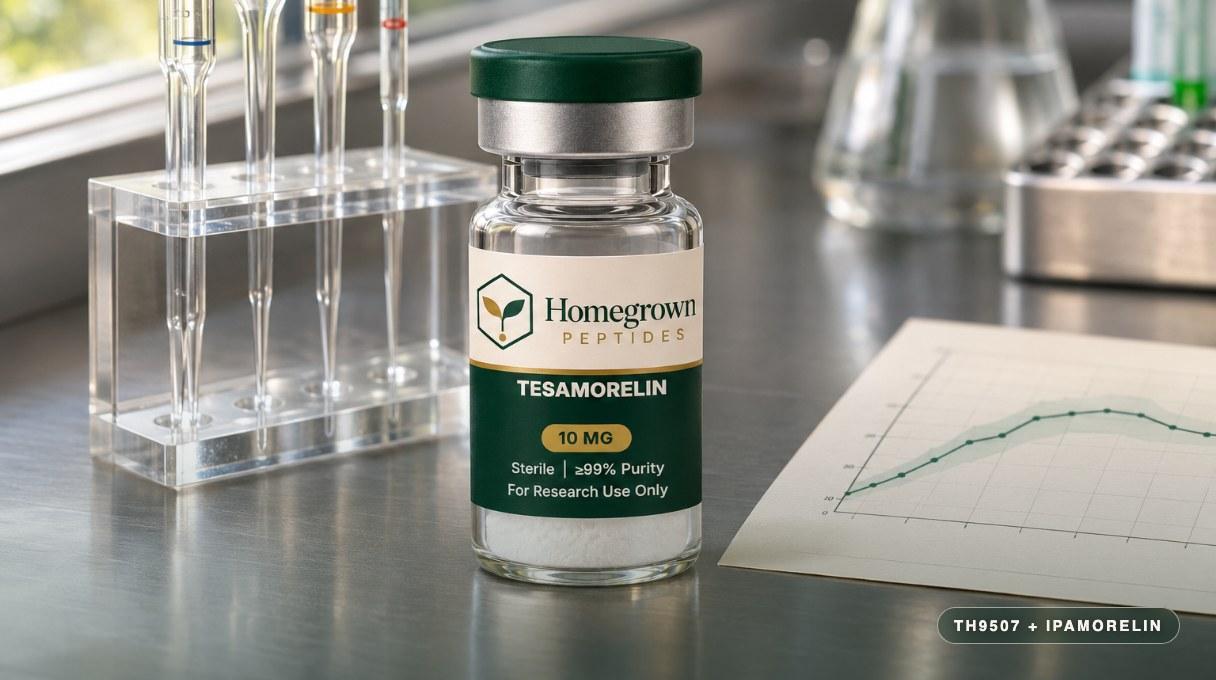
TH9507 + Ipamorelin in Research: Visceral Adipose Trial Designs and the GHRH + GHRP Rationale
What the published visceral adipose tissue trials actually measured, and the receptor rationale for pairing TH9507 with a ghrelin-receptor agonist.
Read the article →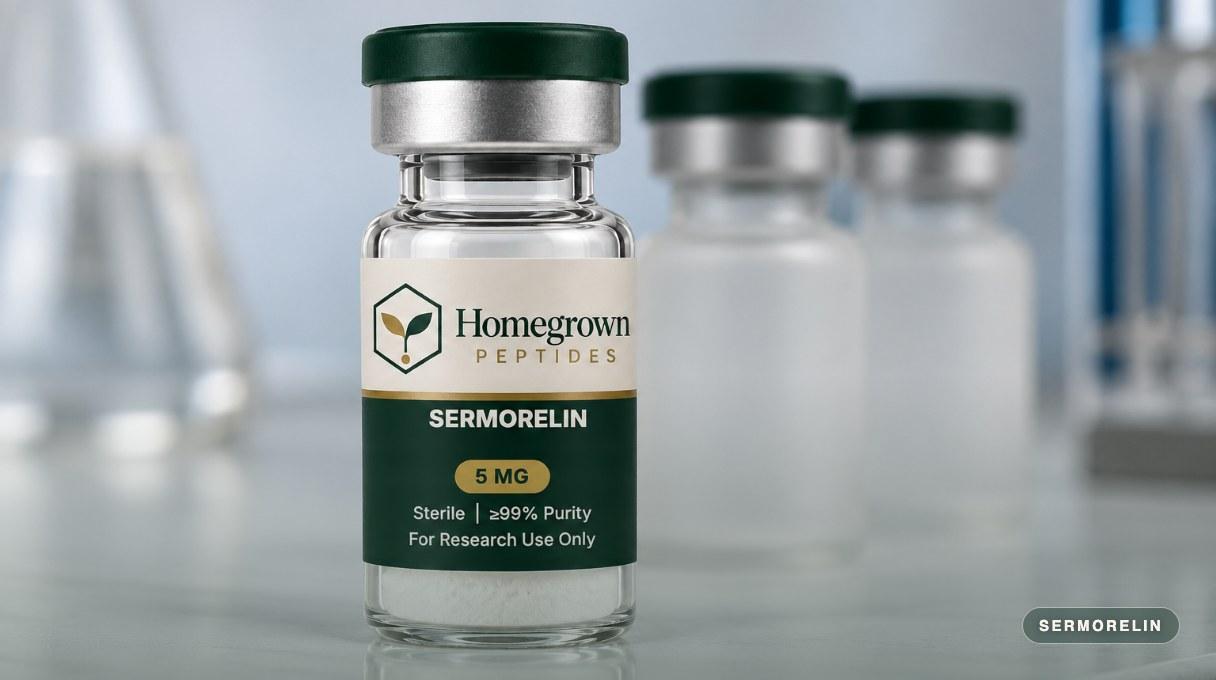
Sermorelin vs Ipamorelin vs CJC-1295 + Ipamorelin: Three GH-Axis Study Designs Compared
How the sermorelin, ipamorelin and CJC-1295 literatures differ in species, receptor target, study design and what each trial actually measured.
Read the article →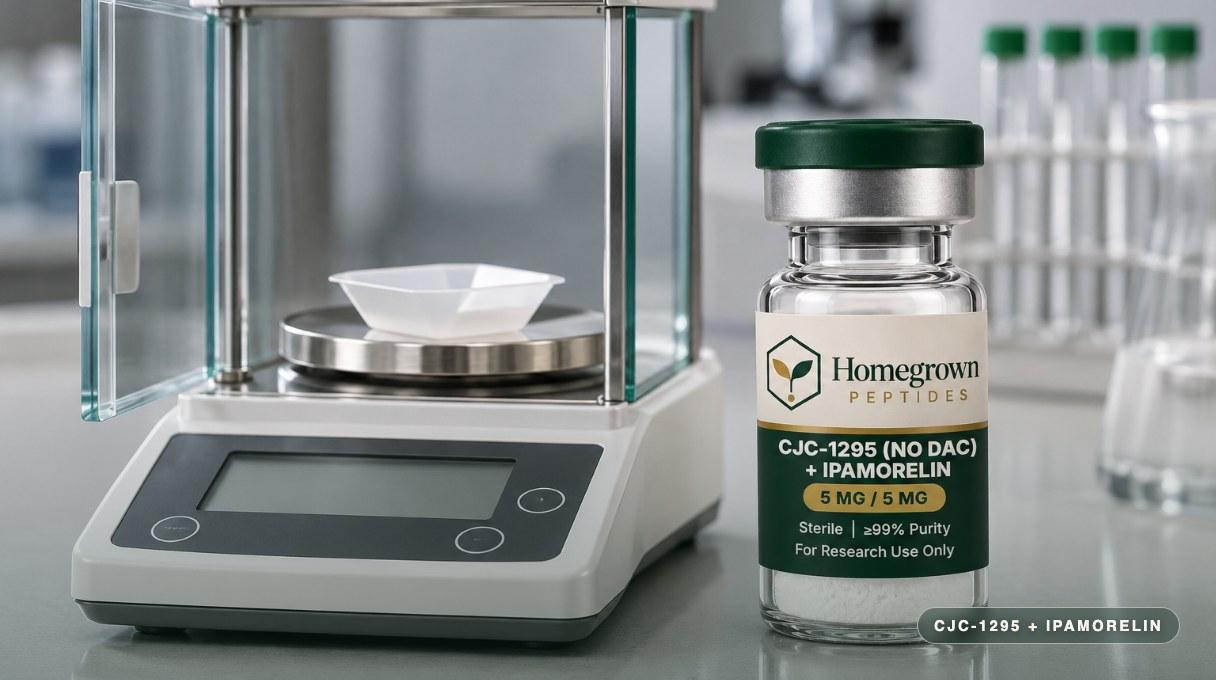
CJC-1295 + Ipamorelin in Research: Amounts, Ratios and Timing Reported in the Published GH-Pulse Studies
No published trial reports a combined CJC-1295 plus ipamorelin ratio. Here is what each molecule's own literature reports for amounts and timing.
Read the article →